

Sweeteners and sugar alternatives
INGREDIENTS
The BOTTOM LINE
- Consumers still seek to indulge in the occasional sweet baked good or snack
- Swapping for cane sugar can impact product formulation
- Customers are not necessarily willing to compromise on taste when reducing sugar
Natural selection
With consumers increasingly looking to avoid sugar and artificial ingredients, natural alternatives are as popular as ever.
David Feder, Group Technical Editor
Sugar remains one of the most scrutinized ingredients in the modern food supply. Nearly every consumer health and nutrition survey conducted over the past several years has placed full-calorie sweeteners—typically sucrose, glucose, and fructose—near or at the top of consumer concerns, with roughly eight in 10 respondents citing sugar reduction as a priority.
Results of a survey early last year by the International Food Information Council (IFIC) found that, when asked to name their preferred tastes, more than half of those polled—nearly 60%—placed “sweet” in the top two positions. Yet 78% of respondents ranked reducing overall sweetness in their diets as “very” or “somewhat” important. Tellingly, greater than half of those polled declared desserts and sweet snacks to be the largest contributors of sweetness in their diets.
Bakery and snack products continue to be viewed as affordable indulgences—64% of consumers actively budget for them, according to the American Bakers Association. This tension between desire and restraint is reshaping formulation strategies across baked goods, snacks, and confections—driving renewed interest in traditional sweeteners and accelerating adoption of fruit-derived and plant-based alternatives that align with clean-label and “health halo” positioning.
Courtesy of Arminas Raudys/Pexels
Going traditional
Bakery and snack formulators are working to bridge this dichotomy by focusing increasingly on less dramatic changes in sugar content as opposed to going totally sugar-free. To that end, some of the original sweeteners used in baking and confectionery are enjoying a renaissance. Honey, molasses, malted grain syrups, and fruit-derived sweeteners are increasingly replacing refined sucrose, as bakers and snack manufacturers seek ingredient statements that resonate with consumers looking for natural, minimally processed foods.
These natural sweeteners take a “less is more” approach to creating a more holistic flavor profile that allows for some reduction in total sugar, without compromising—and in many cases, while boosting—overall enjoyment of the final product. Typical reductions in total sugars range from around 10-25%. These might seem small compared to sugar-free approaches, but consumers have expressed satisfaction with partial reductions when the result is a flavor and texture profile that equals or even exceeds a normally sucrose-sweetened version of the same item.
Among trending single-ingredient sweeteners, fruit-derived options stand out. Coconut sugar continues to gain traction, joined by a growing array of sweeteners sourced from fruits such as apples, pears, and pomegranates, and from pastes, purées, powders, and extracts of dried fruits such as prunes, figs, raisins, carob, dates, and others. All have become increasingly favored, particularly in baked snacks and bars.
Functionality beyond flavor
While fruit-derived sweeteners typically offer only modest caloric reductions compared with sucrose, their functional and sensory advantages make them attractive tools for modern formulation. Many are naturally higher in monosaccharides, particularly glucose, which can help control browning reactions in bakery products. In purée or syrup form, they contribute humectancy, surface shine, and moisture retention—helping to reduce staling and extend shelf life in cookies and soft baked goods.
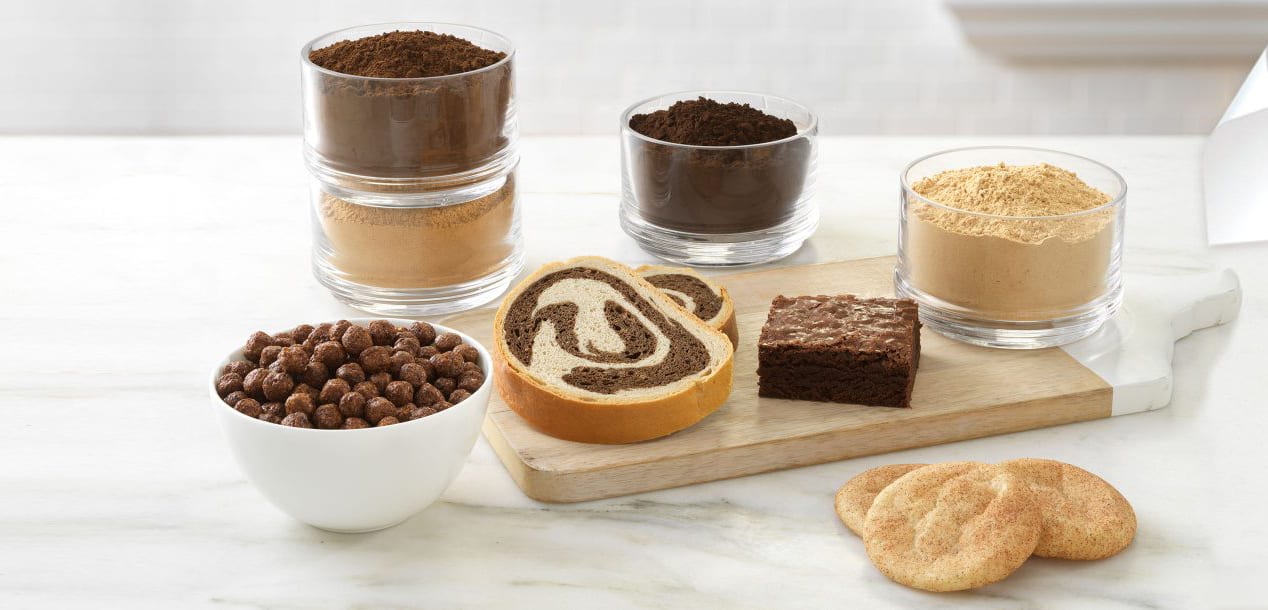
Color is another advantage. Date, carob, raisin, fig, and coconut sweeteners are well suited to baked goods where brown color notes are desirable. A recent innovation in this space is a powdered sweetener derived from carob fruit. Marketed as a clean-label alternative to pure sucrose, carob sweetener exhibits browning and caramelization behavior similar to sucrose and contributes no off-notes—allowing baked goods to maintain structure and confections to retain a chewy bite.
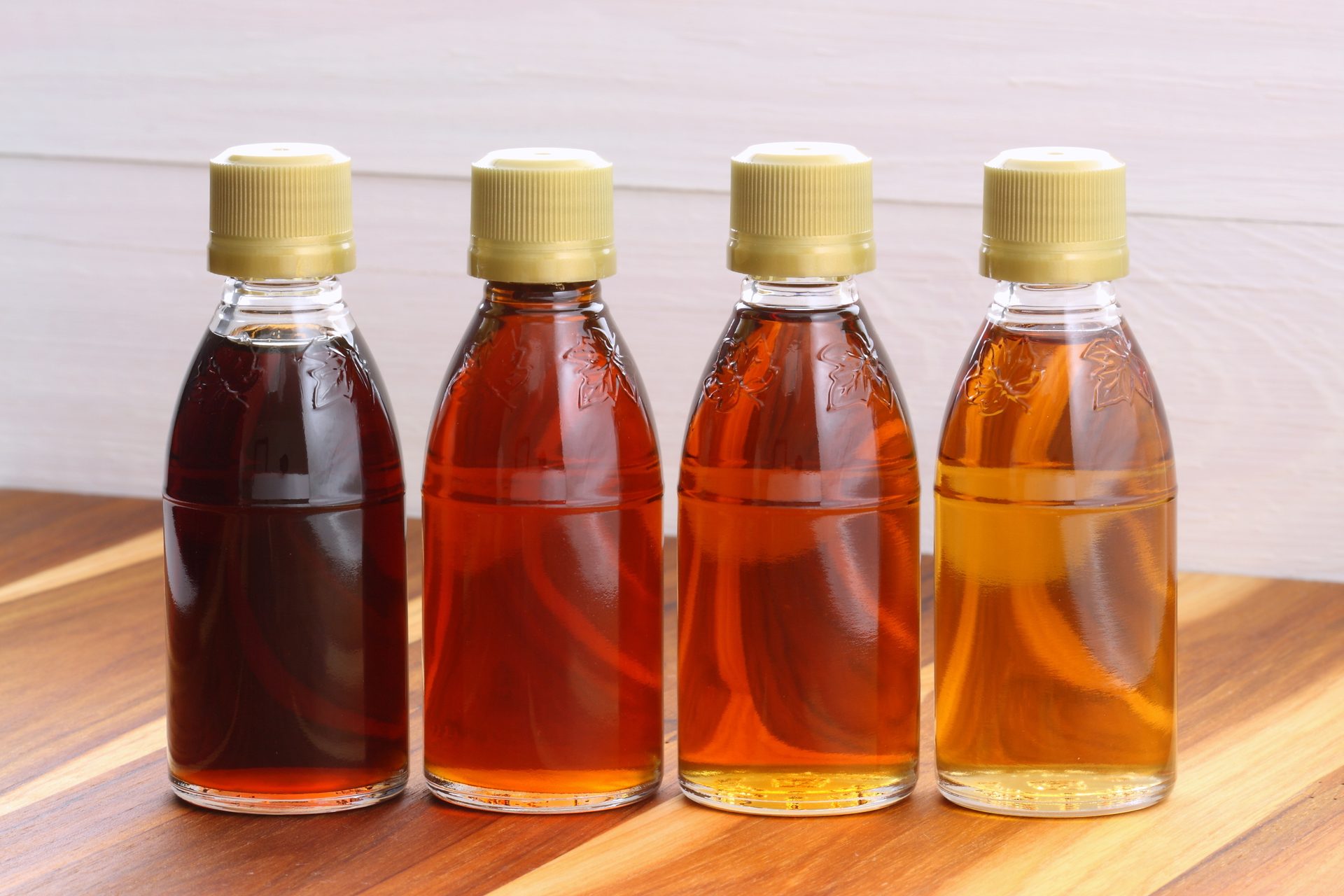
Adjacent to fruit sweeteners are traditional syrups such as maple, agave, sorghum, molasses, and grain-based syrups derived from brown rice and malted barley, oats, or wheat. Their ability to reduce overall sugar intensity stems from broader flavor profiles compared with refined sucrose. Sorghum syrup, in particular, is gaining attention as a cost-effective partial or full replacement for sugar or honey in baked goods, with added benefits as a browning agent in gluten-free formulations.
Courtesy of Bascom Maple Farms
Honey, molasses, and malted grain syrups also work well in formulations where a dark gold or brown color evokes richness and adds visually to the perception of flavor. On the other side of the color wheel, berry-based concentrates and powders can reinforce red and purple hues, helping replace artificial colorants—an increasingly important benefit as manufacturers respond to pressure to eliminate synthetic colors from foods and beverages.
That said, formulators must account for the compositional complexity of fruit-based sweeteners. Their relatively high mineral content and residual flavor notes can influence taste, volume, and texture, and may require adjustments to leavening or structure when replacing sucrose.
Beyond sweet
“Fruit-derived sweeteners are acceptable replacements for sucrose due to the ratio of innate sugars combined with fibers and naturally occurring texturizing agents,” says Justin Kanthak, product line director of global food business for Biospringer by Lesaffre & Co. “They contribute flavor complexity through functional sugars and other components such as minerals and flavonoids.”
Kanthak reminds that in considering fruit-derived sweeteners, formulators should keep in mind the attributes they bring to the finished product in addition to sweetness and structure: “For example, when selecting date sugar or coconut sugar, it's essential to account for the residual flavor components—toasted, ‘planty,’ fruity, etc.—because those attributes might fit certain specific applications better.”
He also points to another benefit of fruit-derived sugars when it comes to baked snacks and confections: “Due to the natural mix of sugars, the contribution to caramelization and Maillard browning can be less complicated. Also, residual components like naturally occurring texturants [such as] pectin and other fibers fill functional and volumetric gaps.”
Additionally, Kanthak points out adjustments might need to be made to the formulation if switching from sucrose to a fruit sugar, because “in some cases, the balance of natural sugars does not yield the lift needed for significant sugar replacement.”
Consumer research suggests that these innovations are well timed. Multiple studies indicate that modest reductions in sweetness often go unnoticed, and many consumers actively perceive processed foods as overly sweet. A study published in the November 2024 issue of Scientific Reports found that consumers were able to “maintain their preference for reduced-sweetness carbonated soft drinks, without affecting sweetness intensity perception.” Interestingly, an Israeli study published in 2022 in the journal Foods found that, of more than half a million online consumer reviews of more than 32,000 food products, between 7 and 16% included complaints of “oversweetness.”

Courtesy of Jenni Spinner
Twin titans of temptation
Two low-calorie sweeteners have entered the mainstream with strong promise for bakery and snack products: allulose and tagatose. Both are classified as “rare sugars” and perform similarly to sucrose, although each carries formulation limitations to go along with their impressive benefits.
Allulose has a flavor profile similar to crystalline fructose, and tagatose has an ultra-clean flavor profile that matches sucrose. Both are available as free-flowing fine crystals and have the same solubility and bulking capacity as sucrose. Allulose is also available in a clear syrup form similar to light corn syrup. Allulose has another advantage: it does not have to be included as an added sugar on the nutrition facts label.
Courtesy of Briess Malt & Ingredients
Allulose is an epi-isomer of fructose that behaves similarly to crystalline fructose, but has only 0.2-0.4 kcals/gram vs. 4.0 kcals/gram for sucrose and fructose. It is more hygroscopic than sucrose, which can necessitate slight adjustments for texture, but this also makes it especially ideal for items such as soft-baked cookies. Although nominally at around a 70 brix, for many formulations it can still be used as a 1:1 drop-in replacer for sucrose. It has a more rapid Maillard Reaction, so baking times and temperatures might need to be adjusted slightly.
There are some formulations where allulose does need a sweetness lift. These can come from plant-derived high-intensity sweeteners (HIS) such as stevia and monkfruit. Ingredient technologists have developed sweetener systems that combine allulose with HIS and a bridge ingredient to match the desired flavor profile of sucrose.
“The next best thing to sucrose in just about any application is the trio of allulose, a rebaudioside M/D steviol glycoside blend, and soluble tapioca fiber,” notes Thom King, founder and chief innovation officer of Icon Foods. “Each brings something unique to the table, but together, they create a temporal sweetness curve that feels remarkably like sucrose. They play like a symphony of flavor and function as opposed to a lone cello.”
King adds the soluble tapioca fiber component is the “unsung hero” of this three-part sweetener system.
“Beyond its prebiotic halo, it contributes viscosity and mouthfeel that carry the other two ingredients across the palate,” he says. “This fiber provides the sugar syrup-like effect formulators crave—thick enough to mimic the body of sugar, and smooth enough to mask off-notes.”
Tagatose is 92% as sweet as sucrose, yet has only around a third the caloric impact—about 1.35 kcals/gram. It doesn’t raise blood sugar and has a Glycemic Index of 3, so is ideal for foods supporting blood sugar management needs, and like allulose, it is non-cariogenic.
“[Tapioca] fiber provides the sugar syrup-like effect formulators crave—thick enough to mimic the body of sugar, and smooth enough to mask off-notes.”
— Thom King, founder/chief innovation officer, Icon Foods

“Consumers are looking for healthier fats, such as those from coconut oil, olive oil, and avocado oil.”
— Jackie Steffey, senior customer innovation manager, AAK